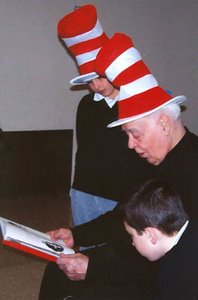
Another fine homily, given yesterday, by our friend Fr. Anselm Ramelow, O.P. Fr. Anselm is a Dominican Priest and Professor of Philosophy at the Dominican School of Philosophy and Theology here in the Bay Area.
Martyrdom, the Antichrist and the Christian Witness
(Feast of the Vietnamese Martyrs)
Today we celebrate the Vietnamese Martyrs, many Catholic faithful, priests and laity who have given their life for their faith throughout several centuries, be it the political persecutions of the 19th century or the communist persecutions of the 20th century. These persecutions are ongoing. We know them through the many Vietnamese brothers and sisters who are living in this country. Their strong faith has lead many of them also to embrace vocations to the priesthood and religious life, including the Dominican Order. With that they are an important witness to all of us.
Their primary witness, though, was and is not for us, but before the powers of the world. That is what we call martyrdom. That Church has always considered martyrdom to be primarily a public and political act. You are not a martyr, if you die through an accident, or as a victim of a criminal act of private persons. Martyrdom is the outcome of a confrontation with political authority, with those who hold public office.
This is true even today in Vietnam, or also in Orissa, India. I am sure you have followed that in the news. There the government might hide behind the criminal acts of violence and murder by organized mobs or gangs. But their public refusal to take legal and police actions against the perpetrators is a clear endorsement of these acts. Standing by where it is your authority and duty to act, is itself an official statement.
At times the confrontation will be more explicit. This we see among the early Christian martyrs, who were arrested and killed by the authorities of the Roman Empire. They were brought before the courts and legally tried. That is why we get some of our documentation of these martyrs from the archives of the Roman Empire. Again, martyrdom is not death through a criminal act, but death through the very legal system itself that is meant to protect us from criminal acts.
That is also, why traditionally the role of the Antichrist is associated with a political power, as one can see in the book of Revelation, but also in much of the later literature, e.g. in Michael O’Brien’s Father Elijah or Robert Hugh Benson’s The Lord of the World or in the writings of Vladimir Solovyev, all of whom rely on much older perennial wisdom in the Church.
Political power is not, of course, something bad in and by itself. Indeed, Paul’s letter to the Romans says that all political authority is from God. But political power is always deeply ambivalent. (Even if it is in favor of the Church it tends to corrupt her.) The Antichrist is traditionally conceived of as a political ruler, and even a ruler that aspires to world rule.
Jesus promised us as much: he said that they will bring you before governors and courts. He also said that we are not worry, because at this point the Holy Spirit will take over. He will be the one who will give us the right words to answer.
And why is that? It is because we are giving a public witness for the Christian faith. We are not just giving witness for our own subjective opinions before some other equally subjective private individuals, but we are giving witness before public authorities to an equally public faith that is not just ours, but ultimately comes from God himself. It is the faith of the Church that the creator of the universe has established for this public witness. We are speaking not for ourselves, but for the Church, and therefore we will be able to speak with the authority of the Church, i.e., with the Holy Spirit.
But we will also speak for Jesus Christ himself. Jesus himself was put on trial. He was brought before the Roman governor, Pontius Pilate. He witnessed to the truth before the public authorities of the Roman Empire – only to receive the cynical answer: what is truth? He received a court sentence from these authorities, a death sentence, as an expression of a perverted political and judicial system that had replaced questions of truth with the questions of power.
Ever since, public authorities and courts have frequently put themselves in that position, not realizing that the ones who are really on trial are the judges themselves, because they are attempting to judge the king of the universe, who judges them by becoming a witness, a martyr.
Whenever Christians are in those situations, they should realize that they are standing in for Jesus himself, or rather that Jesus is standing there for them, giving witness in and through them in the Holy Spirit. We might suffer, but we will have his support and power for our witness.
But why this conflict in the first place? Why is there a perpetual struggle between Church and State, with the Roman Empire and then its successors in the Middle Ages and finally throughout modern history and in all parts of the world? Why is the public square never a neutral arena, but will always bear witness to either Christ or Antichrist?
For one, because God is different from the world; he is not identical with it, but its creator. God transcends this world, stands over against it in total freedom. He has created it freely and governs it according to his gracious will. That is why Jesus can tell Pilate in his trial that his kingdom is not of this world.
Pope Benedict has also pointed out that the ethics of the Sermon on the Mount would probably not work, if you would make them into state laws. Turning the other cheek and not caring for tomorrow are more likely to be realized by individual Christians aspiring to something greater than the secular government, and rightly so. He sees this as opening up the legitimately different directions and purposes of Church and secular state, something unique to Christian history.
So far, so good. But why would we then have a conflict? After all, if the state cares about the world, and the Church about heaven, they should be able to coexist peacefully. No reason for court trials and martyrdom here.
The reason is that we are monotheists. We do not believe that God is responsible only for heaven and its kingdom, and another god would have made the earthly world and rules that kind of kingdom. We are not dualists. Both heaven and earth were made by God. The world is not a bad place; it is made by God, too. And we are meant to live in it and shape it as well. We have a responsibility for heaven and earth. In our own personal lives and for others it will matter what we do in this world and in the realm of the powers that have authority over it. This is what leaves us in the tension of being citizens of the kingdom of heaven and of living in this world at the same time. (It was already St. Irenaeus of Lyon who made this point in the 2nd century; he claimed that martyrdom is in this way specific to the Christian faith, and later became a martyr himself.)
Again, Jesus is the model: Jesus is God, the second person of the Trinity, existing from all eternity. But he is not staying far away; rather, he takes our human nature, lives a human, earthly life, preaching the Sermon on the Mount to people who continued to lead lives in their particular circumstances. Jesus did so himself. And just as this brings him into conflict with political authority, it will also do so for all those who follow him. (As he promised: “the servant is not greater than the master.”) So, while the Church is not all about politics and a social Gospel, it is impossible that the message of the Church will not have political implications and will raise eyebrows, if not persecutions.
That might be, why the letters of St. John describe the Antichrist as the one who denies that Jesus came in the flesh. He fears the unavoidable interference in his own political realm. He does not want another power besides himself. A Church that has a special, legally guaranteed status through concordats, that is a “perfect society”, complete in its own right, with its own laws (canon law) does not fit the neat logical of a purely earthly realm. Early modern political philosophy has always taken exception to this (e.g., Hobbes, Spinoza, Rousseau, Hegel), and so does the Antichrist. That is why he wants world rule. It is a total rule, and it is an international rule, where no other international power like the Vatican can interfere in the affairs of national states. Nation states will not be able to control an external authority like the Vatican, but a World-government might. It is the direct competition to the universal spiritual authority of the Church.
Ultimately, however, the witness of the Church does not just challenge national authorities or even international authorities, but the ultimacy of the world as such. It is a witness, sometimes a martyrial witness, to the fact that this life, this world is not all that there is. And this is the true scandal that provokes persecution.
The Antichrist is not primarily someone who is a bad person in the usual sense. He is not a criminal. He is not even the usual kind of selfish tyrant. In fact he is usually expected to be humanitarian, self-less, ascetic, sometimes a vegetarian, a compassionate friend of man and animal.
The conflict is not selfishness or immorality of the usual kind, but it is primarily a conflict of authority and a conflict over the question where true authority comes from. Even political authority comes from God, yet the Antichrist will speak in his own name.
Implied in this is also the question where our ultimate hope comes from: If there is no hope and no God beyond this world, then we will have to play God ourselves. That is what the snake promised: you will be like God, knowing good and evil for yourself. Yes, one can and should promote politically humanitarian goals, but if it is in the spirit of the Antichrist it will be in the name of inner-worldly goals and authorities; it will argue with the logic of the needs of this world and make individuals and religions subservient to the survival of the planet, arguing, e.g., for eugenics, euthanasia and population control. While indeed it will be Christianity that defends the sanctity of life in the human person as an image and likeness of God – an image, which just like the God it represents, transcends the earthly goals and ends of this world.
If religions, however, refuse to serve the goals of the Antichrist and disrupt the process, they will be treated like another pest in the organism of humanity that is to be exterminated. Already in the Roman Empire Christians were singled out in this way as being “anti-social” or being filled with an odium humani generis – a hatred of the human race.
So we see some perennial features emerging, which writers of various kinds of pointed out throughout the ages.
And this scenario should sound familiar to our own experience as well: in a time, when these inner-worldly goals and measures are more and more codified in our legal system, trying to coerce the Church and its individual members into its very structures, this conflict will be increasingly unavoidable. Not just in the U.S., but in the whole western world, if not globally, we might in the near future find ourselves in the position of being brought before the courts. Cardinal Stafford recently said in Washington (at the Catholic University of America) that in the next few years Gethsemane will not be marginal for American Christian. “We will know that garden.” While we might not lose our lives as the Vietnamese martyrs did, we might sometimes lose our jobs, our freedom, our money and our institutions (especially in teaching and healthcare).
This is why we have reason to recall some of the perennial wisdom of the Church about the principles that rule this world and govern history. This is not the first time and it probably will not be the last time that shows some more apocalyptic features. The Vietnamese martyrs show the same situation, and indeed it is something that we will find whenever we are called to a public witness for our faith before the political powers of this world.
Tuesday, November 25, 2008

Monday, November 24, 2008
Cardinal Stafford and Doug Kmiec
From The Tower:
Cardinal J. Francis Stafford, head of the Apostolic Penitentiary of the Holy See, is standing by controversial comments he made about President-elect Barack Obama during an on-campus lecture last Thursday. In an address hosted by the John Paul II Institute on Marriage and Family, Stafford called President-elect Barack Obama’s policies “aggressive, disruptive and apocalyptic,” said that his election was “a cultural earthquake” and that Obama campaigned on an “extremist anti-life platform...
Stafford told CNN he does believe Obama’s stance on abortion rights condones violence towards unborn children, and he does not understand how a Catholic voter could look favorably at the president-elect when “he is hostile to the life of an unborn child."
The Cardinal is absolutely right. Professor Douglas Kmiec attempted to answer His Eminence and defend Obama. Kmiec's defense included this unbelievable statement:
"Quite obviously, and quite sincerely, President Obama shares with our Church a concern for the most vulnerable..."
Obama, when he served in the Illinois Senate spoke against and voted against the Illinois Born Alive Infants Protection Act. That act was introduced because babies, the victims of live birth and induced labor abortions were simply left to die. They were the most vulnerable, helpless people on this planet. This is all a matter of public record. Let's listen to Professor Kmiec again:
"Quite obviously, and quite sincerely, President Obama shares with our Church a concern for the most vulnerable..."
Kmiec is willingly separating himself from reality. Pray for him!
Cardinal J. Francis Stafford, head of the Apostolic Penitentiary of the Holy See, is standing by controversial comments he made about President-elect Barack Obama during an on-campus lecture last Thursday. In an address hosted by the John Paul II Institute on Marriage and Family, Stafford called President-elect Barack Obama’s policies “aggressive, disruptive and apocalyptic,” said that his election was “a cultural earthquake” and that Obama campaigned on an “extremist anti-life platform...
Stafford told CNN he does believe Obama’s stance on abortion rights condones violence towards unborn children, and he does not understand how a Catholic voter could look favorably at the president-elect when “he is hostile to the life of an unborn child."
The Cardinal is absolutely right. Professor Douglas Kmiec attempted to answer His Eminence and defend Obama. Kmiec's defense included this unbelievable statement:
"Quite obviously, and quite sincerely, President Obama shares with our Church a concern for the most vulnerable..."
Obama, when he served in the Illinois Senate spoke against and voted against the Illinois Born Alive Infants Protection Act. That act was introduced because babies, the victims of live birth and induced labor abortions were simply left to die. They were the most vulnerable, helpless people on this planet. This is all a matter of public record. Let's listen to Professor Kmiec again:
"Quite obviously, and quite sincerely, President Obama shares with our Church a concern for the most vulnerable..."
Kmiec is willingly separating himself from reality. Pray for him!
Sunday, November 23, 2008
FOCA and our Shepherds
Canon lawyer Ed Peters discusses FOCA, and possible episcopal responses:
"The final wording of the Freedom of Choice Act (FOCA) has yet to be set, but there is every indication that it will be the most radical piece of pro-abortion legislation ever proposed at the federal level. The near certainty that FOCA will be re-introduced (compounded by the increased likelihood that it will pass and be signed into law) means that, ready or not, Catholic bishops will have to face squarely the problem of well-known Catholic legislators supporting a specifically and gravely evil bill."
Mr. Peters discusses the options here.
H/T Ignatius Insight.
"The final wording of the Freedom of Choice Act (FOCA) has yet to be set, but there is every indication that it will be the most radical piece of pro-abortion legislation ever proposed at the federal level. The near certainty that FOCA will be re-introduced (compounded by the increased likelihood that it will pass and be signed into law) means that, ready or not, Catholic bishops will have to face squarely the problem of well-known Catholic legislators supporting a specifically and gravely evil bill."
Mr. Peters discusses the options here.
H/T Ignatius Insight.
Saturday, November 22, 2008
Common Ground with Theorists of Murder?
Surprise, surprise. Today news from CNA:
"As President-elect Obama builds his new administration, his list of new appointees makes it even more apparent that he is comfortable with the pro-abortion lobby. This became even more clear on Saturday when Ellen Moran, executive director of EMILY’s List, was named White House communications director.
Moran currently serves as executive director of EMILY’s List, where she oversees the national staff and charts the overall strategic direction of the organization. EMILY's List, one of the most important Democratic constituency groups, says it is "dedicated to building a progressive America by electing Democratic pro-choice women to office."
There is no common ground possible with a person who believes it is acceptable behavior to murder another person, until they renounce that position. The position itself precludes common ground, because it is a denial of common humanity. That's what being "pro-choice" on abortion means--it's a denial of common humanity.
To those "Catholics" like "Catholics in Alliance for the Common Good," who say:
"In an effort to promote more productive ways to reduce the abortion rate, Catholics in Alliance just released a groundbreaking national abortion reduction study that offers compelling findings pro-life and pro-choice leaders can unite behind to reach common ground solutions on this profound moral issue. "
Or like Professor Douglas Kmiec, who says:
"The central hope of the Obama campaign is to find common ground—not by "favoring" that which can never be acceptable, the taking of innocent unborn life, but by dealing with the legal reality in a way that at least reduces the likelihood of abortion."
We reply with Lord Acton's words: "The greatest crime is Homicide. The accomplice is no better than the assassin; the theorist is worse." A person who is "pro-choice" on abortion is a theorist of murder. There can never be "common ground."
"As President-elect Obama builds his new administration, his list of new appointees makes it even more apparent that he is comfortable with the pro-abortion lobby. This became even more clear on Saturday when Ellen Moran, executive director of EMILY’s List, was named White House communications director.
Moran currently serves as executive director of EMILY’s List, where she oversees the national staff and charts the overall strategic direction of the organization. EMILY's List, one of the most important Democratic constituency groups, says it is "dedicated to building a progressive America by electing Democratic pro-choice women to office."
There is no common ground possible with a person who believes it is acceptable behavior to murder another person, until they renounce that position. The position itself precludes common ground, because it is a denial of common humanity. That's what being "pro-choice" on abortion means--it's a denial of common humanity.
To those "Catholics" like "Catholics in Alliance for the Common Good," who say:
"In an effort to promote more productive ways to reduce the abortion rate, Catholics in Alliance just released a groundbreaking national abortion reduction study that offers compelling findings pro-life and pro-choice leaders can unite behind to reach common ground solutions on this profound moral issue. "
Or like Professor Douglas Kmiec, who says:
"The central hope of the Obama campaign is to find common ground—not by "favoring" that which can never be acceptable, the taking of innocent unborn life, but by dealing with the legal reality in a way that at least reduces the likelihood of abortion."
We reply with Lord Acton's words: "The greatest crime is Homicide. The accomplice is no better than the assassin; the theorist is worse." A person who is "pro-choice" on abortion is a theorist of murder. There can never be "common ground."
Thursday, November 20, 2008
Proposition 8 Goes to Court
 It will be upheld. But we have to prepare for ballot initiatives launched by those who would destroy marriage, as early as 2010.
The "Protect Marriage" attorneys are happy about this, because otherwise litigation would have gone on forever in lower courts.
And according to the San Francisco Chronicle this morning:
"...Kennard's vote a bad sign?" (of course, what's considered "bad" by the San Francisco Chronicle is generally considered to be good by a normal human being).
"While both sides cheered the court's decision to take up the cases, Kennard's lone vote to deny review could spell trouble for opponents of Prop. 8.
Kennard is the court's longest-serving justice, having been appointed in 1989, and has been one of its foremost supporters of same-sex couples' rights. Without her vote, the May 15 ruling would have gone the other way. But she wrote Wednesday that she would favor hearing arguments only about whether Prop. 8 would invalidate the pre-election marriages, an issue that would arise only if the initiative were upheld.
"It's always hard to read tea leaves, but I think Justice Kennard is saying that she thinks the constitutionality of Prop. 8 is so clear that it doesn't warrant review," said Stephen Barnett, a retired UC Berkeley law professor and longtime observer of the court.
For those seeking to overturn Prop. 8, "I would not think it would be encouraging," said Dennis Maio, a San Francisco lawyer and former staff attorney at the court."
Posted by Gibbons J. Cooney
Providence can be painful
This follows up on Fr. Malloy's recent post on the speech othat James Francis Cardinal Stafford gave at the Catholic University of America. This article is from today's LifeSiteNews
The Coming "War" Between the Obama Administration and the Catholic Church
The possible signing of the Freedom of Choice Act (FOCA) by President-Elect Barack Obama would be "the equivalent of a war" an unnamed senior Vatican official recently told TIME magazine.
The focus of the Vatican’s concern, FOCA, is a bill that would do away with state laws on abortion, including laws mandating parental involvement, or banning partial birth abortion. FOCA would also compel taxpayer funding of abortions, and, of greatest concern to Bishops, would force faith-based hospitals and healthcare facilities to perform abortions.
"To put it differently, were FOCA to become law (it needs to be reintroduced in the House), the culture war that the Vatican official was referring to would come to a boiling point," he warned. "In practical terms, this would mean the closure of every Catholic hospital in the nation: No bishop is going to stand by and allow the federal government to dictate what medical procedures must be performed in Catholic hospitals. Make no mistake about it, the bishops would shut down Catholic hospitals before acquiescing in the intentional killing of an innocent child. Were this to happen, it would not only cripple the poor, it would cripple the Obama administration."
Posted by Gibbons J. Cooney
The Coming "War" Between the Obama Administration and the Catholic Church
The possible signing of the Freedom of Choice Act (FOCA) by President-Elect Barack Obama would be "the equivalent of a war" an unnamed senior Vatican official recently told TIME magazine.
The focus of the Vatican’s concern, FOCA, is a bill that would do away with state laws on abortion, including laws mandating parental involvement, or banning partial birth abortion. FOCA would also compel taxpayer funding of abortions, and, of greatest concern to Bishops, would force faith-based hospitals and healthcare facilities to perform abortions.
"To put it differently, were FOCA to become law (it needs to be reintroduced in the House), the culture war that the Vatican official was referring to would come to a boiling point," he warned. "In practical terms, this would mean the closure of every Catholic hospital in the nation: No bishop is going to stand by and allow the federal government to dictate what medical procedures must be performed in Catholic hospitals. Make no mistake about it, the bishops would shut down Catholic hospitals before acquiescing in the intentional killing of an innocent child. Were this to happen, it would not only cripple the poor, it would cripple the Obama administration."
Posted by Gibbons J. Cooney
Earthquake!
The decline in respect for human life has had “catastrophic effects” on the unity and integrity of the United States, which are evidenced by the presidential election, says a Vatican official.Baltimore-native Cardinal James Stafford, major penitentiary of the Apostolic Penitentiary, affirmed this in a lecture on "Humanae Vitae" last Thursday at the Catholic University of America.
His lecture, “Pope Paul VI and Pope John Paul II: Being True in Body and Soul,” pointed out the need for Catholics to return to the true values of marriage and human dignity faced to the current challenges.“Because man is a sacred element of secular life,” the cardinal said, “[…] a person’s life cannot ultimately be controlled by government.”
"On Nov. 4, 2008, America suffered a cultural earthquake,” continued the cardinal. He pointed out that president-elect Barack Obama campaigned on an “extremist anti-life platform,” and described him as “aggressive, disruptive and apocalyptic.”
WASHINGTON, D.C., NOV. 19, 2008 (Zenit.org).-
His lecture, “Pope Paul VI and Pope John Paul II: Being True in Body and Soul,” pointed out the need for Catholics to return to the true values of marriage and human dignity faced to the current challenges.“Because man is a sacred element of secular life,” the cardinal said, “[…] a person’s life cannot ultimately be controlled by government.”
"On Nov. 4, 2008, America suffered a cultural earthquake,” continued the cardinal. He pointed out that president-elect Barack Obama campaigned on an “extremist anti-life platform,” and described him as “aggressive, disruptive and apocalyptic.”
WASHINGTON, D.C., NOV. 19, 2008 (Zenit.org).-
Tuesday, November 18, 2008
Who is in Charge?
With our worries about the state of faith and morals of our country, pause a moment and know that "there is a God in Israel!" Our land, with all its problems, was created by God and owned by Him!

We think we are important; and we are, because He created us and made us for Himself.
Think of His power and take comfort in His concern for us as we witness the grandeur of His world.
The Sombrero Galaxy - 28 million light years from Earth - was voted best picture taken by the Hubble telescope. The dimensions of the galaxy, officially called M104, are as spectacular as its appearance. It has 800 billion suns and is 50,000 light years across.
We think we are important; and we are, because He created us and made us for Himself.
Think of His power and take comfort in His concern for us as we witness the grandeur of His world.
The Sombrero Galaxy - 28 million light years from Earth - was voted best picture taken by the Hubble telescope. The dimensions of the galaxy, officially called M104, are as spectacular as its appearance. It has 800 billion suns and is 50,000 light years across.
Life, Reality, and Natural Law
Another excellent and timely homily, given yesterday, by our friend Fr. Anselm Ramelow, O.P.
Fr. Anselm is a Dominican Priest and Professor of Philosophy at the Dominican School of Philosophy and Theology here in the Bay Area.
I.
“What do you want me to do for you?” He replied, “Lord, please let me see.” Jesus told him, “Have sight; your faith has saved you.” He immediately received his sight. This story is countercultural. Far from crying out for Jesus to make us seeing, the present culture seems intent on preserving its blindness.
II.
There is, for example, the blindness for what is called the natural law. Natural law, as its name says, is a law that is inscribed in the nature of things. There is something in how things are that tells us how they should be: If we see a cat with only three legs, we know that these are only three legs, and that the cat rather ought to have four legs. It is the nature of the cat to have that many legs.
III.
We ordinarily do perceive these things. Yet, we are less willing to acknowledge that there is something like a nature of things, when it becomes inconvenient. The same perception should, for example, tell us something about our very own nature. For the most part, we acknowledge our nature, for example, when it comes to health care: when we perceive that we are sick, we do see that we are not how we ought to be – just like the cat with the three legs. And so we go to the doctor. We also know that we should not overeat, because it is unhealthy and leads to physical states that are contrary to our nature. People also exercise to stay healthy, although here it might already get inconvenient, and we are therefore more ready to be in denial about what our nature is.
IV.
That denial, however, becomes most pronounced when we enter the realm of sexual ethics. That certain organs and their use are made by nature for the sake of procreation seems to unduly limit our freedom. And I am not only talking about gay marriage here, but also about contraception and quite generally the promiscuity of our society. Even pregnancy is changed from the preciousness of fertility into an accident, an illness that is to be taken care of by abortion, with the help of one’s health-insurance. Here the nature of things is turned into it’s very opposite.
Any appeal to the normative demands of the natural law, which in ordinary life is unwittingly accepted, suddenly starts to become something of an outrage. We will even hear the accusation of imposing our faith on other people.
V.
But this not about faith at all. It is natural law, i.e., it is about nature, not about grace or the supernatural. We do not need faith to see that a cat with three legs is missing something. This is something that is accessible to all people who possess reason. We are therefore also held responsible for any violation of the natural law. Ignorance of the law is not an excuse; we are supposed to know.
When the man in the Gospel asks Jesus to see, Jesus tells him: your faith has saved you. Faith can indeed make us seeing, where we have become blind even to the things that we can know by nature and reason. But we ought to know them even apart from faith; that is itself part of our nature.
VI.
The natural law, I said, is a law inscribed into the nature of things. Who wrote it there? The one who made these natures. The one who made our natures, our bodies and brains as well. God himself wrote that law, and not just on the stone tablets of the 10 commandments, but into the nature of things as well as into the very flesh of our hearts, as St. Paul says. He is the lawgiver who obliges us to follow the law; but he also gives us a law that is our very own: if we break that law, we break ourselves.
VII.
If on the other hand, there is no God, if the way how cats are and how we are, is just the meaningless outcome of a Darwinist evolution, then there is no natural law. Modern science since Descartes has made an effort to describe reality in such a way, that it could be understood without God. That included the emphatic denial of something like the nature of things, i.e., of anything normative in reality. Everything therefore was open to the boundless manipulation by the new technologies that this modern science yielded.
This eliminated therefore the theoretical basis for natural law. And so we find ourselves indeed in the situation that Dostoevsky described, when he said: if there is no God, then everything is permitted. And the existentialist Jean Paul Sartre emphatically stated that this is not a bad thing, but rather the liberation of man.
VIII.
What we are looking at is therefore ultimately the attempt to liberate man from God. Because if God exists, then reality has meaning, then it will reflect God’s design. There will be a nature of things that expresses the purpose of God; it will be something that we have to respect, be it in animals, endangered plant species or in ourselves. It will put limitations on what we can rightfully do with each other, with ourselves and with embryos. The very existence of God implies this.
The next battle that we will have to face will be therefore not just about abortion or gay marriage; it will be about the very existence of God himself, including our ability to teach children about him. You might think I am exaggerating. But the movement called “New Atheism” is already producing bestsellers like Richard Dawkins’ The God Delusion and Daniel Dennett’s "Breaking the Spell." It is already making inroads in the academic world. Even at a “hardcore” Catholic College like Steubenville students are reported to have lost their faith after reading these books.
The authors of these books claim that religion is just an aberration of the evolution of our species that should be eliminated. One of the ways to eliminate it, is to forbid parents to teach their children any kind of religion. Dawkins and Dennett declare religious education for children to be a form of child abuse. I have no doubts that we will face even this battle in the near future. Already now God is pushed out of the public square, replaced not by something neutral – for there is no neutrality in these matters – but replaced by an atheistic faith, which is proclaimed by silence and absence.
IX.
As awful as this is, it puts the focus where it belongs: it is not about this or that moral issue, it is about the very existence of God. If there is no God, then there is no natural law that would put any limitation on our freedom. If on the other hand, God exists, then there will be ethical consequences that people are increasingly inclined to reject.
The question for us is: would we want to live in a society in which God is declared dead? Would we want to live in a society, in which everything is allowed, not just to ourselves, but also to others, including those in government? How would we live together at all, with no common nature to appeal to? And would we want to live in a society in which there is no guidance anymore regarding right and wrong, except majority votes? In other words, would we want to live in a society in which might is right?
In the name of what would we protest against injustices against the health and well-being of people, if not in the name of our nature, a nature created by God, a nature that expresses his designs and laws, a nature that wants to be well and ought to be well? The appeal to human rights becomes vacuous, if it is not concretized in natural law.
Could we even appeal to the freedom of choice of those who are oppressed? How is their will not just another part of their nature? Would it not just be another brute fact that gets in the way of our own freedom, something that can be just as well trumped by a stronger, but equally brute fact, that of the majority choice? And how about those who are too old or too young or too sick to exercise their free choice?
X.
It would seem that the words that the first reading from the book of Revelation addresses to the Church at Ephesus are addressed to our culture as well:
Realize how far you have fallen. Repent, and do the works you did at first. Otherwise, I will come to you and remove your lampstand from its place.
It would seem that we have all reason to cry out with the blind man in Jericho: Lord, please let me see! It is our gift as Catholics that we have a faith that makes us see what everyone should be able to see by the light of his conscience: the law of nature, which is an expression of God’s gracious will. It is a faith that cures us from our blindness. And by curing us it will help others to see as well: the Gospel tells us that the blind man immediately received his sight and followed him (Jesus), giving glory to God. When they saw this, all the people gave praise to God.
Those who perceive the natural law have overcome their blindness, they will follow Jesus, and they will know nothing less but God himself. And they will praise him.
Fr. Anselm is a Dominican Priest and Professor of Philosophy at the Dominican School of Philosophy and Theology here in the Bay Area.
I.
“What do you want me to do for you?” He replied, “Lord, please let me see.” Jesus told him, “Have sight; your faith has saved you.” He immediately received his sight. This story is countercultural. Far from crying out for Jesus to make us seeing, the present culture seems intent on preserving its blindness.
II.
There is, for example, the blindness for what is called the natural law. Natural law, as its name says, is a law that is inscribed in the nature of things. There is something in how things are that tells us how they should be: If we see a cat with only three legs, we know that these are only three legs, and that the cat rather ought to have four legs. It is the nature of the cat to have that many legs.
III.
We ordinarily do perceive these things. Yet, we are less willing to acknowledge that there is something like a nature of things, when it becomes inconvenient. The same perception should, for example, tell us something about our very own nature. For the most part, we acknowledge our nature, for example, when it comes to health care: when we perceive that we are sick, we do see that we are not how we ought to be – just like the cat with the three legs. And so we go to the doctor. We also know that we should not overeat, because it is unhealthy and leads to physical states that are contrary to our nature. People also exercise to stay healthy, although here it might already get inconvenient, and we are therefore more ready to be in denial about what our nature is.
IV.
That denial, however, becomes most pronounced when we enter the realm of sexual ethics. That certain organs and their use are made by nature for the sake of procreation seems to unduly limit our freedom. And I am not only talking about gay marriage here, but also about contraception and quite generally the promiscuity of our society. Even pregnancy is changed from the preciousness of fertility into an accident, an illness that is to be taken care of by abortion, with the help of one’s health-insurance. Here the nature of things is turned into it’s very opposite.
Any appeal to the normative demands of the natural law, which in ordinary life is unwittingly accepted, suddenly starts to become something of an outrage. We will even hear the accusation of imposing our faith on other people.
V.
But this not about faith at all. It is natural law, i.e., it is about nature, not about grace or the supernatural. We do not need faith to see that a cat with three legs is missing something. This is something that is accessible to all people who possess reason. We are therefore also held responsible for any violation of the natural law. Ignorance of the law is not an excuse; we are supposed to know.
When the man in the Gospel asks Jesus to see, Jesus tells him: your faith has saved you. Faith can indeed make us seeing, where we have become blind even to the things that we can know by nature and reason. But we ought to know them even apart from faith; that is itself part of our nature.
VI.
The natural law, I said, is a law inscribed into the nature of things. Who wrote it there? The one who made these natures. The one who made our natures, our bodies and brains as well. God himself wrote that law, and not just on the stone tablets of the 10 commandments, but into the nature of things as well as into the very flesh of our hearts, as St. Paul says. He is the lawgiver who obliges us to follow the law; but he also gives us a law that is our very own: if we break that law, we break ourselves.
VII.
If on the other hand, there is no God, if the way how cats are and how we are, is just the meaningless outcome of a Darwinist evolution, then there is no natural law. Modern science since Descartes has made an effort to describe reality in such a way, that it could be understood without God. That included the emphatic denial of something like the nature of things, i.e., of anything normative in reality. Everything therefore was open to the boundless manipulation by the new technologies that this modern science yielded.
This eliminated therefore the theoretical basis for natural law. And so we find ourselves indeed in the situation that Dostoevsky described, when he said: if there is no God, then everything is permitted. And the existentialist Jean Paul Sartre emphatically stated that this is not a bad thing, but rather the liberation of man.
VIII.
What we are looking at is therefore ultimately the attempt to liberate man from God. Because if God exists, then reality has meaning, then it will reflect God’s design. There will be a nature of things that expresses the purpose of God; it will be something that we have to respect, be it in animals, endangered plant species or in ourselves. It will put limitations on what we can rightfully do with each other, with ourselves and with embryos. The very existence of God implies this.
The next battle that we will have to face will be therefore not just about abortion or gay marriage; it will be about the very existence of God himself, including our ability to teach children about him. You might think I am exaggerating. But the movement called “New Atheism” is already producing bestsellers like Richard Dawkins’ The God Delusion and Daniel Dennett’s "Breaking the Spell." It is already making inroads in the academic world. Even at a “hardcore” Catholic College like Steubenville students are reported to have lost their faith after reading these books.
The authors of these books claim that religion is just an aberration of the evolution of our species that should be eliminated. One of the ways to eliminate it, is to forbid parents to teach their children any kind of religion. Dawkins and Dennett declare religious education for children to be a form of child abuse. I have no doubts that we will face even this battle in the near future. Already now God is pushed out of the public square, replaced not by something neutral – for there is no neutrality in these matters – but replaced by an atheistic faith, which is proclaimed by silence and absence.
IX.
As awful as this is, it puts the focus where it belongs: it is not about this or that moral issue, it is about the very existence of God. If there is no God, then there is no natural law that would put any limitation on our freedom. If on the other hand, God exists, then there will be ethical consequences that people are increasingly inclined to reject.
The question for us is: would we want to live in a society in which God is declared dead? Would we want to live in a society, in which everything is allowed, not just to ourselves, but also to others, including those in government? How would we live together at all, with no common nature to appeal to? And would we want to live in a society in which there is no guidance anymore regarding right and wrong, except majority votes? In other words, would we want to live in a society in which might is right?
In the name of what would we protest against injustices against the health and well-being of people, if not in the name of our nature, a nature created by God, a nature that expresses his designs and laws, a nature that wants to be well and ought to be well? The appeal to human rights becomes vacuous, if it is not concretized in natural law.
Could we even appeal to the freedom of choice of those who are oppressed? How is their will not just another part of their nature? Would it not just be another brute fact that gets in the way of our own freedom, something that can be just as well trumped by a stronger, but equally brute fact, that of the majority choice? And how about those who are too old or too young or too sick to exercise their free choice?
X.
It would seem that the words that the first reading from the book of Revelation addresses to the Church at Ephesus are addressed to our culture as well:
Realize how far you have fallen. Repent, and do the works you did at first. Otherwise, I will come to you and remove your lampstand from its place.
It would seem that we have all reason to cry out with the blind man in Jericho: Lord, please let me see! It is our gift as Catholics that we have a faith that makes us see what everyone should be able to see by the light of his conscience: the law of nature, which is an expression of God’s gracious will. It is a faith that cures us from our blindness. And by curing us it will help others to see as well: the Gospel tells us that the blind man immediately received his sight and followed him (Jesus), giving glory to God. When they saw this, all the people gave praise to God.
Those who perceive the natural law have overcome their blindness, they will follow Jesus, and they will know nothing less but God himself. And they will praise him.
Monday, November 17, 2008
Gay Activists Disrupt Prayers
This video is from this past Friday night in San Francisco. The group of Christians being harassed is a small group that meets and prays in the Castro every Friday night, for the conversion of sinners.
God Bless Fr. Newman!

Robert Royal, writing in the article "De-forming Consciences" in today's issue of "The Catholic Thing":
“'Voting for a pro-abortion politician when a plausible pro-life alternative exists constitutes material cooperation with intrinsic evil, and those Catholics who do so place themselves outside of full communion with Christ’s Church and under the judgment of divine law. Persons in this condition should not receive Holy Communion until and unless they are reconciled to God in the Sacrament of Penance, lest they eat and drink their own condemnation.'
Who wrote these words? You might guess Joseph Ratzinger, before he became Benedict XVI, on several occasions, not only about voting for pro-abortion politicians, but about those politicians themselves, if they claim to be Catholics. In fact, the words were written by Fr. J. H. Scott Newman, pastor of St. Mary’s Church in Greenville, South Carolina, and inserted into the parish bulletin last Sunday. Fr. Newman was merely expressing the widespread, longstanding, and clear moral understanding of the Church. No good deed, as we know, goes unpunished. "
But the Catholic News Agency is reporting that Fr. Newman's fellow priests are rallying to his support. Nice.
Posted by Gibbons J. Cooney
Friday, November 14, 2008
Father Neuhaus on the Culture War
Over at First Things. God Bless him!
"The aggressor in the opening phases of this Kulturkampf is the Obama administration. The initial response to the aggression was evident in the meeting of Catholic bishops this week in Baltimore. There were refreshingly bold statements by bishops, and by Francis Cardinal George, president of the conference, on the imperative to protect the integrity of the Church’s teaching and to employ every legitimate means to resist the further advance of what John Paul the Great taught us to understand as the culture of death. Some bishops even invoked the venerable tradition of martyrdom, sounding very much like the successors to the apostles that they are.
The Christ against culture model does not come naturally to Catholics. The Church is much more disposed toward conversion, providing moral guidance, and the transformation of culture. The Christ against culture model is never chosen, but sometimes there is no choice. Pushed to the wall by the Obama aggression, it seems evident that most of the Catholic bishops are, in the words of Paul to Timothy, prepared to “fight the good fight.”
Emphases added. Obama is helping our Bishops to remember their vocation. Mysterious ways, indeed.
Posted by Gibbons
"The aggressor in the opening phases of this Kulturkampf is the Obama administration. The initial response to the aggression was evident in the meeting of Catholic bishops this week in Baltimore. There were refreshingly bold statements by bishops, and by Francis Cardinal George, president of the conference, on the imperative to protect the integrity of the Church’s teaching and to employ every legitimate means to resist the further advance of what John Paul the Great taught us to understand as the culture of death. Some bishops even invoked the venerable tradition of martyrdom, sounding very much like the successors to the apostles that they are.
The Christ against culture model does not come naturally to Catholics. The Church is much more disposed toward conversion, providing moral guidance, and the transformation of culture. The Christ against culture model is never chosen, but sometimes there is no choice. Pushed to the wall by the Obama aggression, it seems evident that most of the Catholic bishops are, in the words of Paul to Timothy, prepared to “fight the good fight.”
Emphases added. Obama is helping our Bishops to remember their vocation. Mysterious ways, indeed.
Posted by Gibbons
Subscribe to:
Posts (Atom)